

The Role of Renewable Energy in the Future of Electrical Engineering: Focus on Solar Power Systems
Supervised by Theodora Panagiota Podimat
University of Patras – Computer Engineering and Informatics Department Class of 2026
Written by:
Dimitrios Gantzoulas
Alexandros Kyriakidis
Vasileios Orfanos
Ioannis Gremoutis
Elisavet Pepela
Konstantinos Ioannou
Michail Daskalakis
Introduction
Renewable energy has become a big focus today as the world is dealing with climate change, pollution, and running out of fossil fuels. Which is very different from traditional sources since renewable systems use natural resources like wind or water, and sunlight that don’t run out and can cause way less environmental damage. Out of all of them, solar power is one of the most promising because sunlight is almost everywhere and pretty reliable. This makes it a strong option for producing clean electricity now and in the future.
In electrical engineering, solar energy can change the field. Engineers are working on photovoltaic systems, solar thermal tech, and storage solutions to make it more efficient and easier to use. Groups like the U.S. Department of Energy’s Solar Energy Technologies Office and the National Renewable Energy Laboratory are working on these improvements. Their work helps lower the costs of solar systems, making it easier to connect solar energy to the grid and use it at homes or industries.
This paper will talk about why solar energy is important, its role in electrical engineering, and how it supports a sustainable energy future. From rooftop panels that people see in their neighborhoods to big solar farms, the technology is spreading everywhere, and it shows real answers to today’s energy problems, even showing the reason engineering is so important since you can apply things you have learned on you daily basis.
Background of Solar Power Systems
To explain the history of solar panels, we must first know how they function. Firstly, back in the early 1800s, Alexandre Edmond Becquerel discovered the Photovoltaic effect, which is the core principle of solar panels (silicone PV solar panels = silicone photovoltaic solar panels). This effect states that under observation, different materials produce electricity when exposed to light. Metals, in this case, are the most fascinating as their electrons are known as free-moving or they have delocalized. In simple terms, their electrons are not bound to them, allowing electricity to move more easily. This is the base of how 2 common words are defined:
Voltage: The amount of energy per unit charge available to move charges between two points in a circuit. In simple terms, how much of energy the moving electron has.
Current: The rate at which electric charge passes through a point in a circuit.
Ηistory
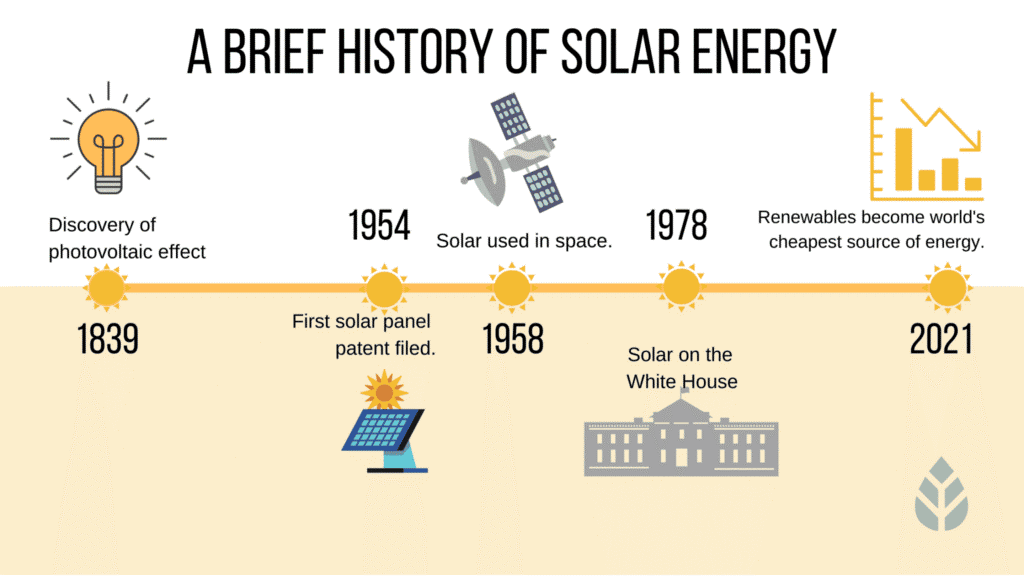
1. The first idea of a solar panel came from 4 people. First, in 1839 was Willoughby Smith (an Englishman) discovered Selenium’s efficiency with light energy, also known as photoconductive properties.
2. Second in 1873 was William Grylls Adams and Richard Evans Day, who showed that selenium can generate electricity from light.
3. Finally, in 1883, Charles Fritts (from the USA) created the first selenium solar cell with a thin gold coating, producing electricity from light at 1% efficiency. After a few years, Albert Einstein was born, and after a few years proved how the Photoelectric theory worked. He explained that as light reflects on a surface, some electrons of that surface break off from atoms, pushing the electrons, which is electricity itself. He won a Nobel Prize for this discovery.
As a result, electricity could be produced from a solar panel.
However, they cannot be controlled, meaning that how much of voltage produced cannot be controlled. Although the more voltage there is, the better, as more electricity can be used.
- In 1954, scientists started to increase efficiency meaning increase the efficiency meaning more voltage was being produced through the circuit as more electrons were knocked off. This time using silicone PV cells.
- In the 1960s, companies needed an alternative energy source as there was an oil crisis.
- In the 1980s, the Japanese and Chinese started to make solar cells cheaper due to mass production techniques. Along with manufacturing multi-junction cells and thin film, increasing efficiency again
- NASA started to use solar cells uniquely by stretching the metal around the spacecraft, making flexible solar cells.
- In the 2000s, efficiency surpassed 20% beginning with large-scale solar farms.
Today
- Many people have solar panels on their roofs, and lab prototypes hit over 40% panel efficiency with multi-junction cells.
- Floating solar farms at sea are expected to increase
- PV solar panel costs have dropped to the point where solar is now the cheapest form of new electricity in many regions.
In the future, hopefully in the coming decades:
- Solar cells advance to 50% efficiency in 2050, commercially available to all. As well as a united grid of all countries using solar panels, as the earth spins to take advantage of where the sun is.
- Solar Paints & Films, printable PV layers that can coat almost any surface.
3. Recycling solar panels. As you know, solar panels have a lifespan of 25-30 years. As technology progresses, taking the materials used to produce solar panels like silver, silicon, and other precious metals, we can make solar panels reusable that will not end up in piles of waste every 30 years.
PROBLEMS WITH SOLAR PANELS:
As solar panels are close to revolutionizing electricity and energy production, many problems arise.
For example, as many systems are designed to run on petrol, fossil fuels, and natural gases, switching to solar panels will not please many people, as they have spent a lot of resources and money on building factories that burn such elements to produce electricity.
Arguments like: “petrol, fossil fuels, and natural gases can be stored to use at any time instead of solar panels that only work in the day”.
As well as: “After producing the amount of electricity required, we stop. However, solar panels continuously make electricity until the sun goes down.”
While these arguments are true, solar panels cannot be controlled in the sense that we cannot control night and day. In the future, we will have something better. Solar panels produce so much electricity during the day, yet there is nowhere to store it; solar farms in the future will use electrolysis to store electricity.
ELECTROLYSIS:
Used when there is excess solar power to split water (H20) into hydrogen and oxygen (electrolysis). Hydrogen can be stored for months and later used in fuel cells, power plants, or industry, as it can be transported like fuel as well as revert again into water with oxygen, allowing electricity to be used at any time.
Components of a Solar Energy System
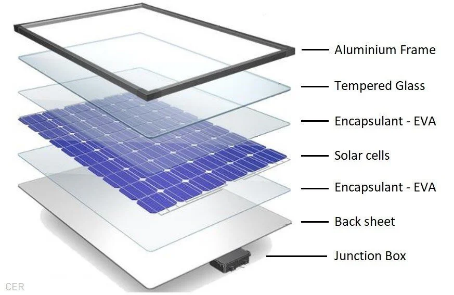
Solar Panels: A component of a solar energy system, which consists series of photovoltaic (PV) cells arranged to generate electricity using sunlight.
PV cells are the main segment of a solar panel, and they convert the sun’s energy to electrical energy.
Photovoltaic cells are made of a semiconducting material that, when struck by sunlight, creates a small current as a result of the photovoltaic effect.
Many solar panels can be oriented together to form a solar array.
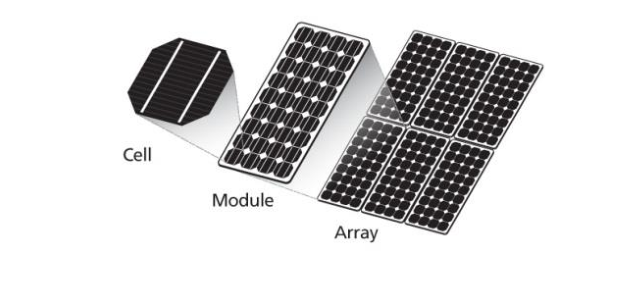
Solar panels are mounted on mounting structures, which can be unmoving (fixed tilt) systems or tracking systems that follow the path of the sun.
Inverters: Inverters are used to convert the direct current (DC) electricity generated by solar photovoltaic modules into alternating current (AC) electricity, which is used for most appliances in our homes and short distance transmission of electricity.
In direct current, the electric charge (current) only flows in one direction. In alternating current, the electric current’s flow is constantly being reversed back and forth.
Battery Storage: In a photovoltaic system, battery storage captures excess energy from solar panels to use it later. Energy storage is not mandatory in a solar system and is never 100% efficient. However, without storage, electricity must be generated and consumed simultaneously, which sometimes means that grid operators take some generation offline in order to avoid over-generation and grid reliability issues.
Charge controllers: An important part of most battery-based renewable energy systems. Their main function is to safely charge solar batteries at the correct rates.
Charge controllers are current and voltage regulators. Without them, solar panels would continue to deliver power to batteries past the point of their full charge, which would result in damage to the battery and potentially dangerous situations.
In addition, some controllers prevent battery overdischarge and display battery status and the flow of power.
There are two main types of solar charge controllers: PWM and MMPT.
- PWM (Pulse Width Modulation) charge controllers are suitable for small systems. They are simple to use, and they regulate by gradually decreasing the current input to the battery.
- MPPT (Maximum Power Point Tracking) charge controllers are used in large systems and are more expensive. They absorb panel current at maximum power voltage while limiting output in order to prevent overcharging. The MMPT charge controllers are more efficient than the PWM controllers because they can monitor the input current and adjust it to regulate the solar system current.
Connection to the grid: Using a grid-connected system, you can power your home or small business with renewable energy during periods when the sun is shining, the water is running, or the wind is blowing. Any excess electricity you produce is put back into the grid. When renewable resources are unavailable, electricity from the grid supplies your needs, getting rid of the expense of electricity storage devices like batteries.
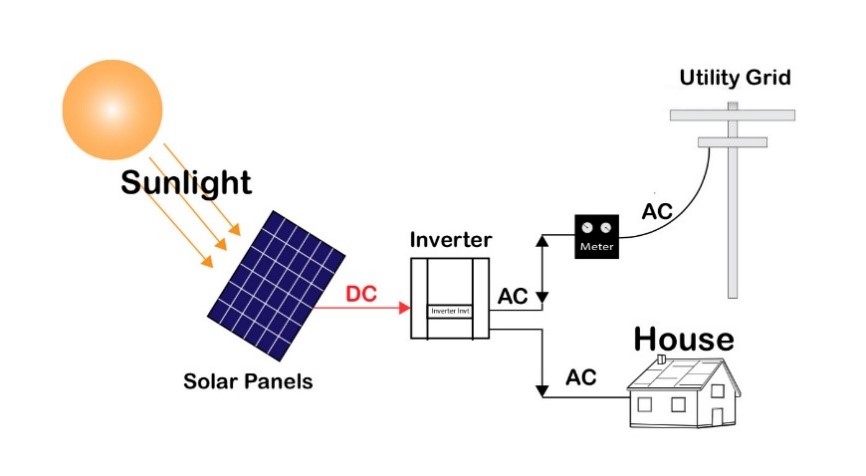
On grid solar power system
Applications and Impact on Electrical Engineering
The importance of solar energy in the future of electrical engineering is really important, and to understand it, we have to know insights into how solar systems are being implemented in real power systems and how engineers are leaving no stone unturned to know how to make it work with maximum efficiency. Solar power is more than just producing electricity; it is about redefining how energy is produced, stored, infrastructure, and used all across the entire globe. In this part, I will discuss smart grids and solar integration, on-grid versus off-grid, the job of the electrical engineer, and efficiency, material, and AI innovations.
SMART GRID AND SOLAR INTEGRATION
Smart grids are electricity networks that use sensors, automation, and real-time communication in order to balance the demand and supply. Unlike traditional grids, smart grids can handle ups and downs in renewable energy, such as solar panels. This is really important since solar energy depends on sunlight, and it can depend on the weather each day. Electrical engineers are responsible for designing the control systems, data algorithms, and power electronics that allow solar panels to connect to the grid efficiently. Through smart meters and AI-powered monitoring, solar energy can be delivered where and when it is needed, reducing waste and improving reliability.
ON-GRID vs OFF-GRID SYSTEMS
Solar systems can be designed as on-grid or off-grid:

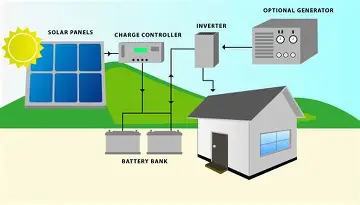
On-grid systems allow homes and companies to feed electricity back to the main grid, often through net metering. This reduces the use of fossil fuels and helps maximize energy supply.
- Off-grid systems are usually paired up with batteries really important for rural and remote areas that don’t have grid access. Electrical engineers must make these systems so that stored energy can cover periods without sunlight, making them reliable for communities that are far from centralized power stations.
ROLE OF ELECTRICAL ENGINEERS
Electrical engineers are crucial to the solar energy revolution and are responsible for:
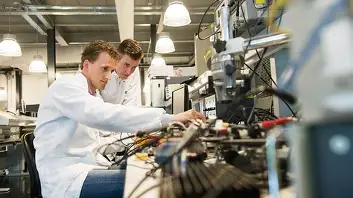
- Creating efficient power electronics such as inverters and converters that can transform solar energy into usable electricity.
- To create the maximum Power Point Tracking systems that cause panels to run at all times at maximum efficiency.
- To create storage and distribution systems, from lithium-ion batteries to hydrogen-based systems, that allow solar electricity to be used at night or on a cloudy day.
With this effort, engineers are not only making solar systems powerful but also sustainable and cheaper.
INNOVATIONS
The future of solar energy:
- Materials: New technologies, such as solar cells and bifacial panels, are increasing the work efficiency of the machines.
- Efficiency: Some tested prototypes are expected to exceed 40% efficiency, and engineers are working to make these into production.
- Artificial Intelligence: AI algorithms can predict solar output, optimize battery life, and detect any system failure that might occur. This makes solar energy even more reliable and safe.
Challenges and Future Outlook
The current gap regarding solar power efficiency technologies is a critical factor to consider. Photovoltaic solar panels operate at an efficiency rate of 15%–22%, meaning they convert a maximum of 22% of solar energy harvested into usable electricity (National Renewable Energy Laboratory, NREL). Focused CSP plants operate at higher efficiency grades but are heavily limited by infrastructure investments, unfavorable weather, and CSP’s linear focus on solar dependency.
The problem of solar energy incorporation within electrical grids is further complicated by weather-stipulated solar power uncertainty. Fluctuations caused by weather conditions, offsetting sunlight hours, and even seasonal changes greatly reduce output potential. Technologies such as sun-tracking panels, anti-reflective coatings, and even optimized layouts are designed to boost capture, but on their own, lack efficiency. Tackling storage solutions, on the other hand, can provide breakthroughs.
Lithium-ion and other traditional batteries face many challenges, including inefficiency and high costs. These conventional batteries also face significant hurdles, such as the expensive flow batteries and thermal and battery energy storage systems (BESS) that cannot provide power during peak demand and low sunlight periods. This is largely because BESS often do not store enough reserve energy to respond to sudden spikes in electricity use, and their charge can be depleted too quickly to meet long-duration needs. Additionally, many batteries have a relatively short life cycle and tend to discharge rapidly, which further limits their effectiveness in long-term grid applications (EnergyEducation.ca, NREL). For a reliable and constant energy supply, overcoming these challenges is essential.
Regarding the future of solar energy, some policies still need to be addressed, such as cost and accessibility. Although the cost of photovoltaic modules has decreased, installation and storage costs still hinder adoption in underserved and remote areas. Additionally, shortages of materials and infrastructure aggravate the issue. This calls for policies, financial support, and improvements in supply chains to tackle these hurdles.
There is potential hope for new technologies such as perovskite solar cells and solar fabrics, where solar power can be integrated into daily objects and surfaces. To make solar a main energy source for the future, overcoming limitations through innovation and collaboration is essential.
Mechanical Engineering in Solar Energy Systems
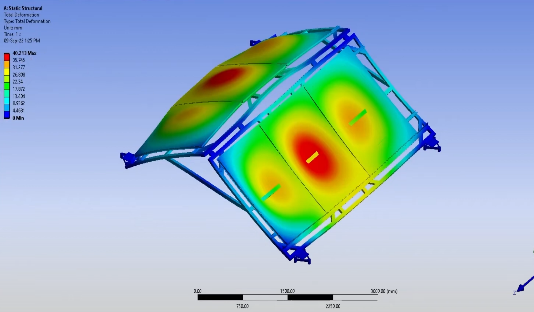
When most people think about solar power, they focus on the electrical side. Mechanical engineering is just as important to making sure a solar energy system works efficiently and lasts a long time. Mechanical engineers are responsible for designing the physical support structures that hold the solar panels, as well as the systems that help manage heat and movement.
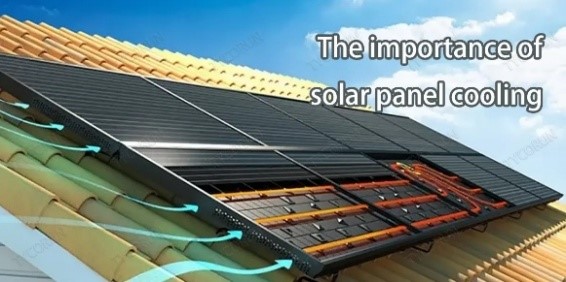
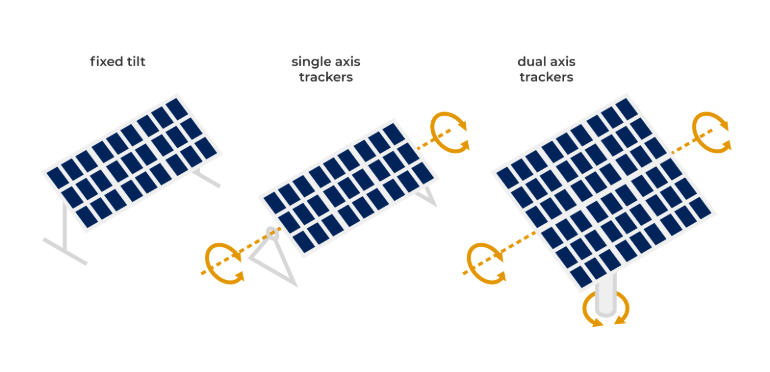
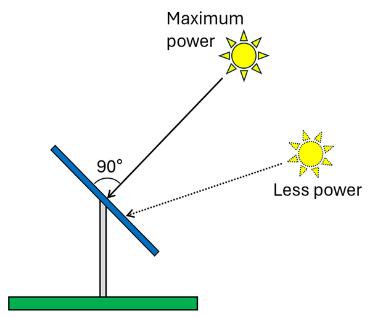
Before anything is built, mechanical engineers study the site conditions. They look at things like wind loads, snow accumulation, and the tilt angle that will provide the best sunlight exposure. For example, panels installed in areas with high wind need to be secured with stronger materials and mounted at specific angles to reduce stress and possibly bending forces. Engineers use it to make sure the system can handle extreme weather without failing. In addition, engineers have at their disposal specific applications where they can design the whole system, and the software can calculate the stress applied to them. Finally, engineers must comply with local regulations such as the ASCE 71. These guidelines cover the essential factors that influence solar panel installations, such as wind loads, snow loads, and dead loads, to ensure the safe and efficient operation of these systems. In more advanced systems, solar panels are mounted on tracking systems that follow the sun throughout the day. These can be single-axis (up and down) or dual-axis (left and up-right and down). Photo-resistive trackers improve energy output by keeping the panels at the optimal angle, but they also add complexity. Mechanical engineers must design moving parts like actuators, gears, and bearings that are reliable and low maintenance, even in harsh outdoor environments, and make efficient enough systems that don’t consume a lot of power but are durable enough. Another key part of mechanical design is thermal management. As solar panels operate, they heat up, and too much heat reduces their efficiency. To fix this, engineers design systems that allow for natural ventilation or use heat-conductive materials to help keep temperatures down. Some high-performance systems even use active cooling, like water circulation, though
that’s less common in residential setups. Material choice is also critical. Engineers usually select lightweight, corrosion-resistant materials like aluminum or coated steel to ensure the system stays durable and efficient for decades. Lastly, there’s always teamwork involved. Mechanical and electrical engineers must coordinate to make sure structural designs support cable routing, inverter placement, and safe maintenance access. Without this kind of collaboration, the system wouldn’t run smoothly or safely. In the end, mechanical engineering helps ensure that solar energy systems are not only efficient but also strong, safe, and built for longevity.
In conclusion, renewable energy, particularly solar power systems, has been a fast-evolving field and a pivotal change towards the end of harmful resources of energy resources. It started as a concept from the discovery of the photovoltaic effect by Alexandre Edmond Becquerel in the 1800s and became reality in 1883, when the first panel with 1% Efficiency was created by Charles Fritts. Charles Fritts reached the development of the panel, having as a basis the discovery of photoconductive properties by Willoughby Smith and the proven theory by William Grylls Adams that selenium can generate electricity from light. The panel consists of photovoltaic cells, which are placed in arrays. Proven by the Nobel Prize-winning Albert Einstein, as the light reflects in those cells, some electrons break off from atoms. Then the direct current(DC) is converted by the inverter into alternating current(AC), making it suitable for powering our homes, appliances, and electrical systems efficiently. Important components are also the charge controllers, which ensure that the batteries are charged safely, and the battery storage, which captures excess energy to use it later. This revolutionary source of energy has been a main topic about which electrical engineers have been researching, intending to make it as efficient as possible. The improvement is constant, as from 1% efficiency in 1883, the levels today have reached around 40% with predictions for 2050 foreseeing 50%.
The efficiency isn’t the only factor that has been improved throughout the years, as the costs have been gradually diminished. After the oil crisis in the 1960s, there was high demand for solar panels, so in the 1980s, the Japanese and Chinese made them cheaper due to mass production. Today, renewables have become the world’s cheapest source of energy. So these evolvements prove that renewables will be the main resource in the future, as the continuous rise of efficiency and the dip in costs showcase how sustainable they are. Also, plans like floating panels, while managing the high construction costs and the previous investments in non-renewable energy, promise a bright future.
Sources:
https://www.energy.gov/eere/solar/solar-energy-technologies-office
https://www.nrel.gov/solar/
https://energyeducation.ca/encyclopedia/Solar_power
slideshow showing this: https://1drv.ms/p/c/aff9bb5d57c26826/ET4FmenbRshJlZ2hdWUIjocBObtJ1hQkiisoGl7oIHVxgw
https://www.energysage.com/about-clean-energy/solar/the-history-and-invention-of-solar-panel-technology
https://www.solarreviews.com/blog/the-history-of-solar-energy-timeline
https://seia.org/blog/solar-century-landmark-moments-history-solar-energy
https://www.energy.gov/eere/solar/solar-photovoltaic-system-design-basics
https://energyeducation.ca/encyclopedia/Solar_power
https://www.nrel.gov/solar/
https://tryengineering.org/resource/lesson-plan/solar-power/
https://arxiv.org/abs/2501.14143
https://journals.indexcopernicus.com/api/file/viewByFileId/2097205
https://www.nature.com/articles/s41598-025-01788-4
https://pmc.ncbi.nlm.nih.gov/articles/PMC8292890/
https://www.sciencedirect.com/science/article/pii/S2772834X25000405
https://www.reuters.com/business/energy/qcells-says-technology-breakthrough-could-reduce-space-needed-solar-panels-2024-12-18/
https://www.exactusenergy.com/blog/structural-requirements-for-solar-panels
https://ratedpower.com/blog/solar-mounting-structure-construction-methods/
https://www.dlubal.com/en/solutions/industries/solar-structures-and-mounting-systems?srsltid=AfmBOopw4CNkoIkh5b4de_z5wp21iyHKsQIChylb36D6CsxKGMHVZc7 (Software example)
https://www.youtube.com/watch?v=cKfhs2ZipxI (Structural analysis)
https://cambridge-energy.co/why-solar-tracking/
https://www.tycorun.com/blogs/news/solar-panel-cooling?srsltid=AfmBOopDr3s6FL-QLjiv2DGW4gXSjSiZ2WaIELJ17ZdiQkucvWKg2xWJ
https://www.cleanenergyreviews.info/blog/solar-panel-components-construction